Cross-Platform Credit Integration Linking Mobile Reel Mechanics to Live Dealer Tables and Progressive Loyalty Programs
Written by Felix Schmitz · Jun 7, 2026

Cross-Platform Credit Integration Linking Mobile Reel Mechanics to Live Dealer Tables and Progressive Loyalty Programs
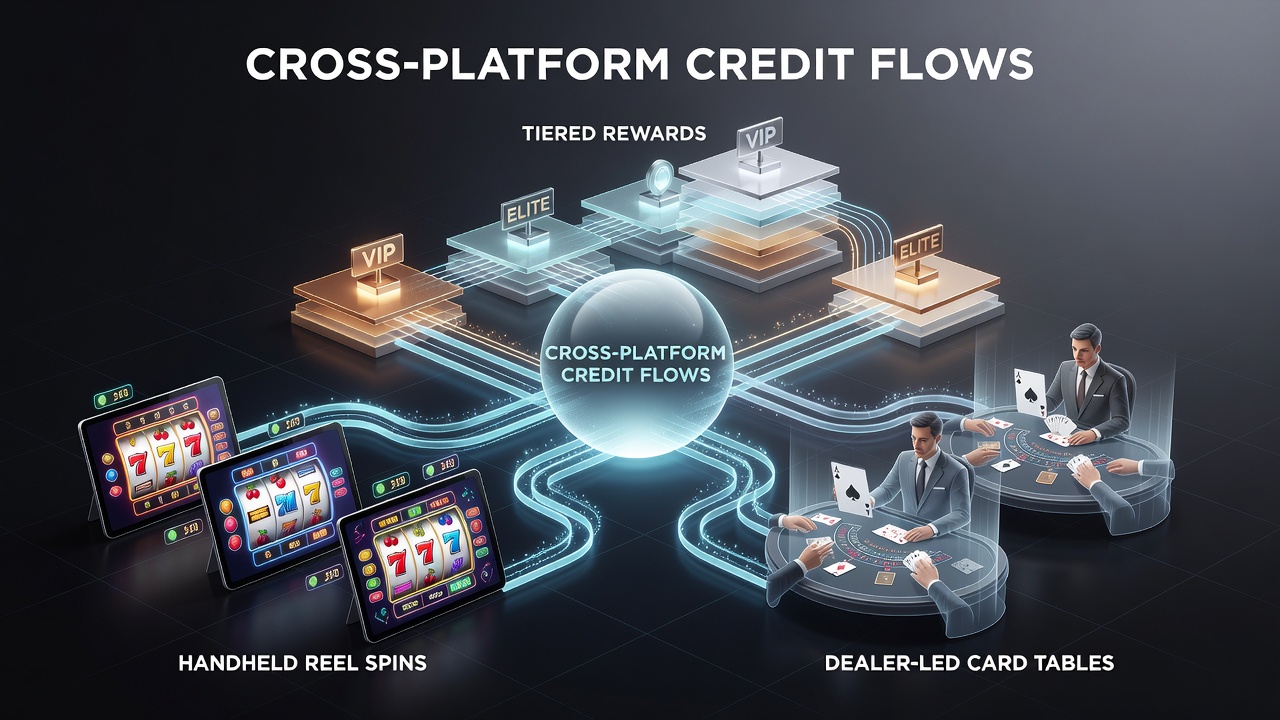
Operators have developed systems that move credits between handheld reel games and dealer-led card tables while feeding activity data into tiered reward structures, and these connections rely on shared wallets that update balances in real time across devices. Industry reports from 2025 show that platforms using unified credit ledgers recorded average session lengths extending by 18 percent when users transitioned directly from spinning reels on mobile to live dealer tables without separate deposits.
Mechanics of Credit Movement Between Reel Spins and Dealer Tables
Systems route funds through centralized accounts that accept deposits from mobile applications and apply the same balances to live dealer sessions, while each spin or card decision triggers instant ledger updates visible on both handheld screens and dealer streams. Data from gaming technology providers indicates that 62 percent of cross-platform sessions in tested markets during the first quarter of 2026 involved at least one transfer between reel products and table environments within a single login period.
Engineers design APIs that synchronize balances so that winnings from reel spins become immediately available for table wagers, and losses at dealer tables reduce the shared pool that funds subsequent mobile play. One study released by the University of Nevada Reno in late 2025 examined transaction logs from 14,000 accounts and found median transfer times of 1.4 seconds when credits moved between reel and table modules.
Role of Tiered Reward Structures in Unified Ecosystems
Tiered programs assign points based on total handle across both reel and table activities, with higher tiers unlocking accelerated point multipliers and exclusive table access that carries over to mobile interfaces. Records maintained by platform operators show that accounts reaching mid-tier status through combined reel and dealer activity retained 41 percent more monthly deposits than single-product users during the same measurement window.
Progression tracking pulls data from every spin outcome and every card hand into a single loyalty engine, and the engine then distributes rewards such as free credit bundles or priority seating notifications directly to the player's primary device. Figures released by the Canadian Gaming Association in May 2026 documented that integrated loyalty systems increased average tier advancement speed by 27 percent compared with programs that tracked mobile and live dealer play separately.
Technical Infrastructure Supporting Seamless Transfers
Secure tokenization methods allow the same credit token to represent value whether a player spins reels on a phone or places bets at a streamed dealer table, and encryption protocols maintain consistency across different regulatory jurisdictions. Network monitoring conducted by several European operators in early 2026 recorded uptime rates above 99.7 percent for credit synchronization services during peak evening hours.
Backend reconciliation processes run every few seconds to match reel and table ledgers against a master account, while automated alerts notify support teams if discrepancies exceed predefined thresholds. Those thresholds typically sit at 0.01 percent of total handle, according to configuration details shared in industry technical briefings.
Regulatory and Compliance Considerations Across Regions
Authorities in multiple jurisdictions require operators to maintain audit trails that capture every credit movement between product types, and those trails must demonstrate that reward calculations treat reel and table activity under identical point-earning formulas. The Nevada Gaming Control Board updated its technical standards documentation in April 2026 to include specific testing protocols for cross-platform wallet functionality.
Operators submit monthly reports that break down credit flows by product category, and regulators review these submissions to confirm that tier advancement rules do not favor one game type over another. Compliance teams at several large operators have noted that integrated systems reduce the number of separate reconciliation files needed by approximately 35 percent.
Observed Patterns in Player Behavior and Platform Performance
Account-level data collected through 2025 and into June 2026 shows that users who alternate between handheld reels and dealer tables within the same session reach the next loyalty tier 22 percent faster on average than those who remain within a single product category. Platform dashboards display these patterns through heat maps that highlight peak transition times, most often occurring between 8 p.m. and 11 p.m. local time.
Developers continue to refine notification systems that prompt players about available table seats when reel balances cross certain thresholds, and these prompts have contributed to measurable increases in table occupancy during otherwise quiet daytime periods. The same data sets reveal that average credit transfer amounts sit between 45 and 120 units per transition in markets where minimum bets range from 1 to 5 units.
Conclusion
Cross-platform credit systems continue to expand the connections between mobile reel activity and live dealer table participation while feeding unified data into tiered reward engines, and operators track these flows through standardized reporting that meets requirements set by various regulatory bodies. The technical and operational frameworks supporting these integrations rely on rapid synchronization, consistent point allocation, and detailed audit capabilities that together enable the movement of value across distinct game formats.